

Leaders from education, health and social care, investment, academia and the third sector have pledged to create a UK-focused Brain Capital strategy and working group to promote good brain health and help address urgent societal challenges.
Attendees at the recent Brain Capital UK Summit in London unanimously agreed to create the UK Brain Capital Alliance and Working Group which will develop a vision and recommendations to be put to the UK Government. These will be aimed at helping to shape a future economic and industrial strategy with mental health and well-being at its core.
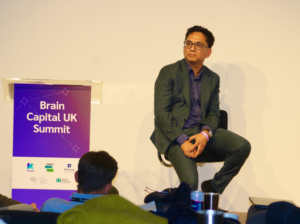
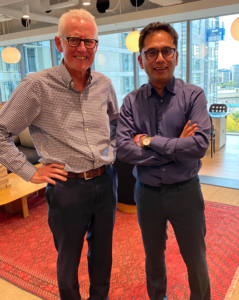
Professor Quazi Haque, Elysium Chief Medical Officer and Executive Operational Director, represented Elysium Healthcare and Ramsay HCG worked in partnership with the Centre for Mental Health and Kooth to launch the UK Brain Capital Summit.
The event drew on successful partnerships with the UN, OECD and The World Economic Forum and The diverse range of attendees included senior representatives from NHSE including Professor Sir Simon Wessely, former Chair of the Royal College of Psychiatrists, and Professor Tim Kendall CBE, the National Clinical Lead for New Models of Mental Health care.
Delegates heard from speakers who shared different perspectives of how poor mental health is negatively impacting not only individuals but also society’s productivity, growth and health. They also explored potential solutions to address the issues.
With increasing numbers of people in the UK, particularly the young, experiencing challenges which impact their education, work and social lives, there are profound implications for the country’s economic productivity and growth, delegates heard.
The economic impact alone runs into billions of pounds per year, and is increasing year on year. The number of young people adversely affected by mental ill health has quadrupled and increasing numbers of people are unable to work. Attendees heard that the estimated impact of this is circa £60-80bn a year to cover welfare, lost taxes and productivity.
The way people work has changed also, the event was told. With less physical work required by humans, and with the advent of AI being used to undertake simpler digital tasks, the skills valued by employers will increasingly focus on problem-solving, critical thinking and strategic abilities. Those skills, however, require resilient brain capital which is at significant risk from poor mental health and well-being.
Panels were convened to address these topics and many more, including sessions on impact investing for brain capital, the treatment and prevention of mental ill health to build a mentally healthier nation, harnessing the power of digital access to support services and new models of mental health care. Professor Haque chaired a panel exploring the role of AI in securing brain capital.
Comparisons were drawn too with the approaches taken to address climate change. Over the last 10 years, delegates heard, people have realised that climate change is not an issue that can be solved by government alone, in the same way improving the brain capital and mental health of the nation is not something that can be ‘solved’ by government alone.
Partnerships, capital investment and creative thinking have been required to move the climate change crisis into the wider consciousness, with its economic and societal impacts better understood and, with that, an increased societal demand for change to happen.
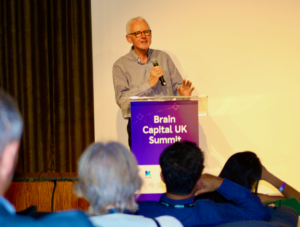
Keynote Speaker Lord James Bethel told attendees: “Taking the climate change conversation from the scientists and having it considered by economists was game-changing. Organisations looked at the costs to them of not addressing carbon and that opened up the conversation. We need to do that for mental health. Just what is the cost to us if we don’t address mental health? If we want a prosperous country, then we need to support people to have good health and good mental health.”
Sir Norman Lamb said: “This is one of the first discussions of this sort in the UK to bring together such a wide range of disciplines. The economic case for confronting these challenges is overwhelming. While we still have some distance to go, we are here initiating this very important discussion which could lead to something very important for this country.
“We are in agreement that this is an issue of strategic importance and there are opportunities for different communities to come together with government to think about how we address brain capital and deploy the potential of our brains to meet the challenges society faces as a result of mental ill health.”
Professor Haque said: “This event was a fascinating opportunity to explore interconnected and urgent challenges and discuss potential solutions. inequitable outcomes across generations.
“Going forward the working group convened following this event will build upon these discussions to build a vision and recommendations to address these urgent and profound challenges.
“We have made great progress promoting brain health and skills initiatives with academic and industry partners across several countries. It’s great to make such excellent progress in the UK.”