

Throughout the month of October we have been sharing a series of Masterclasses hosted by Sophie Bull examining the important topic of Domestic Violence.
As Domestic Violence Awareness Month draws to a close, we speak with Sophie about intimate partner violence, the global scale of the issue, what the barriers may be to a person seeking help and where to find links to support resources.
A good place to start when discussing domestic violence is recognising that the terminology and vocabulary which is used is not always consistent. It varies, there are numerous terms which are used interchangeably and there is no agreed term or consensus when referring to this issue.
Some terms used include spousal abuse, family violence, partner abuse, domestic violence or domestic abuse, interpersonal violence, and intimate partner violence.
Domestic Violence or domestic abuse is a commonly used term.
There are many different definitions for domestic violence, but one example is Any incident or pattern of incidents of controlling, coercive or threatening behaviour, violence or abuse between those aged 16 or over who are or have been intimate partners or family members regardless of gender or sexuality. This can encompass, but is not limited to, the following types of abuse: psychological, physical, sexual, financial, and emotional.
It is used in many countries to refer to partner violence but the term can also encompass child or elder abuse, child to parent violence, or abuse by any member of the household. A limitation of this term is that it does not distinguish partner violence from other relatives in the household. This term also implies that individuals must be living together.
The term intimate partner violence has emerged more recently. Again, there are many different definitions, but some examples are: behaviour by an intimate partner or ex-partner that causes physical, sexual or psychological harm, including physical aggression, sexual coercion, psychological abuse and controlling behavioursor the actual, attempted, or threatened physical harm of a current or former intimate partner.
Definitions for intimate partner violence tend to exclude other family violence, for example child to parent violence or other extended family violence, and focusses on violence between partners. These definitions are examples, but generally definitions include a specification that the behaviour is between partners, including male to female, female to male, same gender relationships, marriage, non legal relationships, those living together, and those not living together. Definitions can vary on what is considered violence, however, generally definitions highlight that some form of harm is caused, for example physical, emotional, or sexual.
Why is considering intimate partner violence important?
Intimate partner violence is different from violence committed against strangers. The violence is often more frequent and more serious. This is thought to be due to the closer relationship between the victim and the perpetrator. There are more opportunities for violence to occur if the perpetrator and victim live together or see each other frequently with the perpetrator having greater access to the victim. This violence is also typically in the context of a strong emotional attachment. Strong emotions may lead to reactive violence and may be more serious.
Intimate partner violence is also one of the most common forms of interpersonal violence internationally and has acute and chronic consequences for the victims, including psychological trauma, physical injury, and sometimes death.
When we consider statistics, globally, 26% of women (aged 15 or over) who have been married/have had partners have experienced physical and/or sexual intimate partner violence at least once in their lifetime.
In the UK, statistics also show that at least 26.6% of women and 14% of men have, at some point, experienced partner abuse since they were 16 years of age. In addition, an estimated 3.5% of adults had experienced partner abuse in the last year.
There are also figures to suggest 1 in 3 victims of partner abuse are male.
It is estimated a call is made to the police every 30 seconds relating to domestic abuse.
On average, every week in England and Wales two women are killed by intimate partners. And every 17 days, one man is killed by an intimate partner.
Each year since 1995, around 50% of all women and 12% of men aged 16 years or older who were murdered in England and Wales were killed by their partner or ex-partner.
Under-reporting of IPV
However, there are a number of limitations we must consider when thinking about the literature, including limitations in relation to the prevalence statistics. One of these limitations is the under-reporting of intimate partner violence. It is thought that only 1 in 10 victims of partner abuse told the police about the abuse they experienced in the last year.
Another study suggests only 31% of women and 18% of men who reported experiencing and incident of domestic violence reported telling the police. Out of those individuals who reported it, only 12% of perpetrators were charged. Because of this, it is estimated only 3% of instances of domestic violence result in an individual being charged.
Barriers to reporting these crimes and seeking help from specialist services can be experienced by all victims.
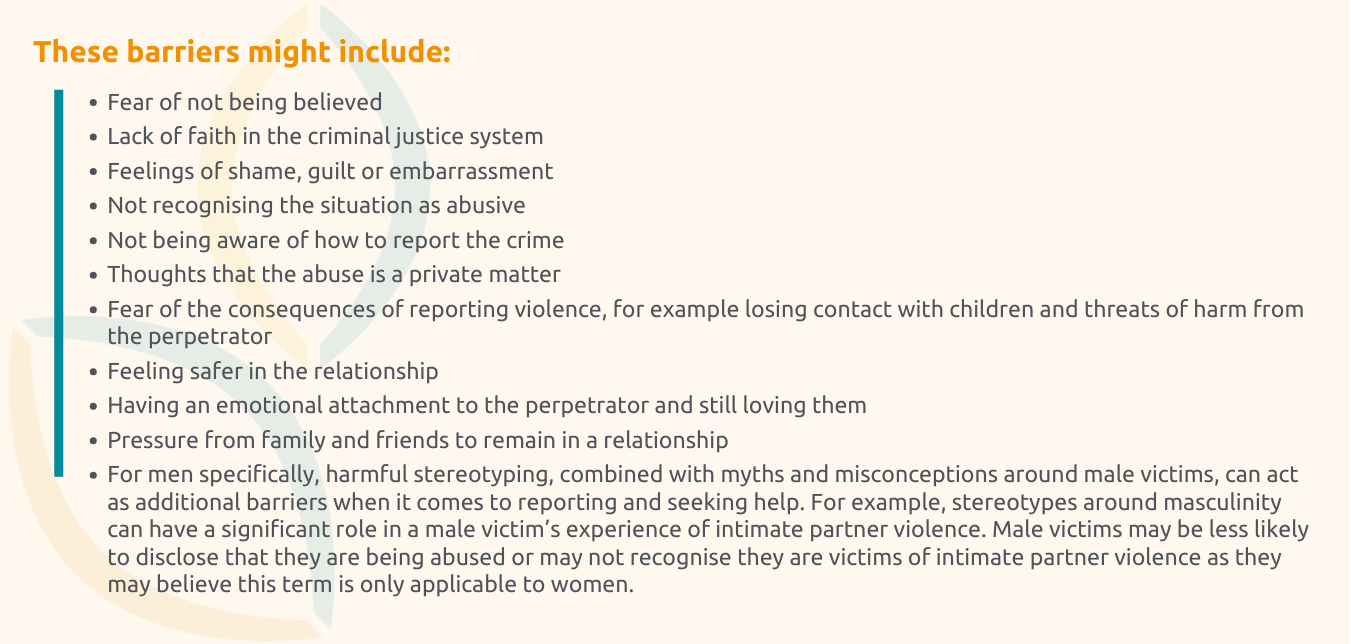
It is also important to note gender issues when thinking about partner violence. Intimate partner violence may occur in any intimate relationship, regardless of the gender of those involved. However, there is less research outside of male to female IPV. There is more limited literature on same-sex relationships and less data on LGBTQ communities. There is also currently no nationally representative data on prevalence of domestic abuse in transgender people.
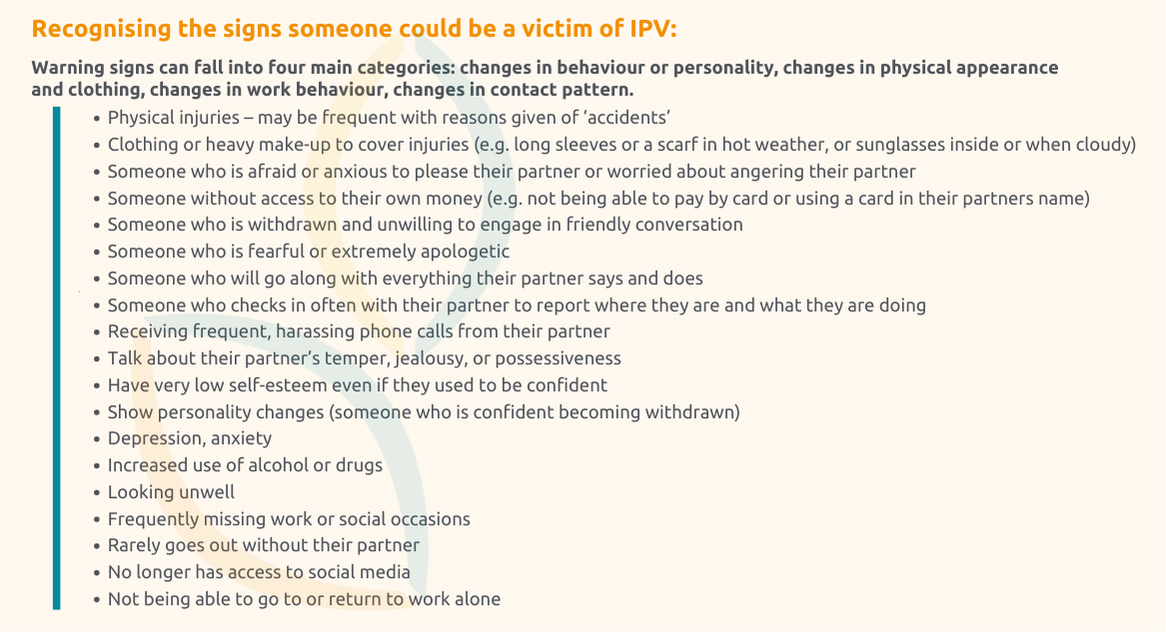
There are lots of support agencies/strategies:
Watch our latest series of masterclasses using the link below:
http://elysiumhealthcare-19527860.hs-sites.com/domestic-violence-awareness-month