

This month we are sharing the Voices of Elysium. One of the ways different people across services share their thoughts, opinions and experience is through co-produced projects.
A series of co-produced QI (Quality Improvement) p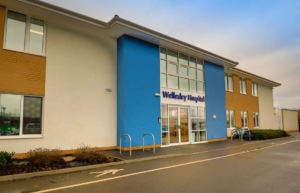 rojects at Elysium’s Wellesley Hospital’s Winsford Ward have brought together patients and experts by experience along with clinical, therapeutic and nursing colleagues to examine how to adapt practices and respond to inequities. One of those explores the important subject of noise on wards, something that is often at the forefront of patients’ minds.
Sian Murphy, Principal Forensic Psychologist at Wellesley Hospital in Somerset, is one of the QI project team leads, alongside Dr Sarah Isherwood, Consultant Forensic Psychiatrist. Four of the ward’s current patients are part of the QI team and join the hour-long weekly meeting, sharing their voice and their experience. 
Sian said: “Noise reduction is often at the forefront of patient’s minds when they arrive for the QI meetings. They have come from busy wards and mornings are busy.
“We tried to explore when the peak noisy times might be but that is difficult for our group to cover, it’s hard to reflect back and remember the times through the day that noise was higher.
“What we were able to track was the kind of noise that is problematic, and how that can vary from one person to another. For some, hoovering at night is not a problem, but it is for others.
“Some of the main ‘offenders’ was slamming doors or doors not being closed quietly at night. Alarms can also be an issue.
“It helped us paint a picture of what are the ‘green’, ‘amber’ and ‘red’ noises and one outcome is we are going to be producing a poster for the ward with just some of the ‘please think about noise’ and some of the issues: ‘if you don’t need to talk outside people’s rooms, please don’t’.
“There are of course things we have to work through, practical things. Have we got agreement to put up posters, for example. What we have to do through QI is present the issue and present the data, be clear about what we’ve concluded and think across the hospital how we might implement the changes.
“They may be something that makes a significant difference for one person. They might be things people have not thought about. And it may be that some projects are things on which we can have cross-ward agreement with the learning applied throughout.”